

Young Urdu poet Shushant Chattopadhyaya 'Safeer' hails from Allahabad (India). Though he was a student of science, it was literature where he found his true calling. For over a decade, he has been writing poems in Urdu on various subjects, including humanism, social issues, love, etc. Many of his works are published in Indian and international literary magazines. He first came into prominence in 2021 with his nazm 'Nazrul', a tribute poem to Kazi Nazrul Islam. His album of ghazals titled 'Saaz-E-Ghazal' came out in 2022. In an interview with the daily 'Khaborer Kagoj,' he spoke about various aspects of his literature. Dr Masuduzzaman interviewed him on behalf of Khaborer Kagoj.
Khaborer Kagoj: You are of Bengali descent, yet you were born in Allahabad. Is this the reason you write poetry in Urdu?
Poet Shushant Chattopadhyaya: I believe the local culture and language play a significant role in one's childhood. Urdu was around me and I was heavily influenced by old film songs which were written by some great Urdu poets like Sahir Ludhianvi, Majrooh Sultanpuri, Hasrat Jaipuri etc.
Khaborer Kagoj: In the environment you studied, what was the emphasis there – Urdu or Hindi?
Poet Shushant Chattopadhyaya: There were more Hindi speakers. However, my medium of education was English.
Khaborer Kagoj: Please tell us about the linguistic environment of your home.
Poet Shushant Chattopadhyaya: At home, we speak Bangla and sometimes English. My grandfather, Acharya Kshetresachandra Chattopadhyaya was a renowned scholar of Sanskrit/Veda. He was a close friend of Netaji Subhash Chandra Bose, a friendship that started at Presidency College, Kolkata. He also received the President's Award for his contribution in Sanskrit language.One of grandmother's brother Sri. P.N. Banerjee was a linguist and knew 27 languages. This environment truly encouraged me to explore more languages.
Khaborer Kagoj: When did you begin writing poetry? Where did the desire and inspiration to write come from?
Poet Shushant Chattopadhyaya: I started writing poetry in English when I was in school. Urdu came much later in my early 20s. My inspiration has always been the human spirit, whether it is reflected in themes of love, social issues, resistance or spirituality.
Khaborer Kagoj: Could you please elaborate on the literary environment, or Urdu/Hindi poets who have inspired you?
Poet Shushant Chattopadhyaya: I came from a science background and hence the literary pull and rational inquiry went hand in hand. I won't say that I was a product of any literary environment apart from the academic atmosphere at home; rather, someone exploring things on his own. I was drawn towards Urdu poets like Firaq Gorakhpuri, Faiz Ahmad Faiz, Noon Meem Rashid, Ali Sardar Jafri, Makhdoom Mohiuddin, and Majaz Lakhnawi to name a few. Kabir, Rabindranath Tagore and Kazi Nazrul Islam influenced me to a great degree.
Khaborer Kagoj: When and how were you attracted to poet Kazi Nazrul Islam?
Poet Shushant Chattopadhyaya: From my childhood. I was very young. My introduction to Kazi Nazrul Islam was through his music. As a child I always felt a tremendous pull in his music. At that age I was not capable of understanding much of his poetry(which I did explore later).
Khaborer Kagoj: Have you read Nazrul’s poetry? Which of his works have you read?
Poet Shushant Chattopadhyaya: Yes, I have read his poetry, though not in a structured manner. I explored and read anything and everything that I got my hands on. I have read poems from Agnibeena, Bisher Banshi, Phanimanasa, Chakrabak, and Morubhaskar.
Khaborer Kagoj: It is clear that you are fond of Nazrul’s poetry. Could you explain why you like Nazrul’s poetry?
Poet Shushant Chattopadhyaya: It is a very difficult question to answer. It is just like being in love, you love for the essence of love. But if I put on my objective hat, I would say his poetry has layers of emotions coupled with a dream for a better world.
Khaborer Kagoj: You have written poetry about Nazrul in Urdu. But Nazrul is a Bengali poet; why did you choose to write about him in Urdu rather than Bengali?
Poet Shushant Chattopadhyaya: The answer is fairly simple - because I write poems in Urdu. I paid my respect to this great poet in my poem titled 'Nazrul'. I feel he is beyond language. Today, many works are done in various other languages centered around him.
Khaborer Kagoj: You have written Ghazals, produced albums of them, and performed recitations. Nazrul also wrote Ghazals, which were set to music. Is this similarity merely coincidental?
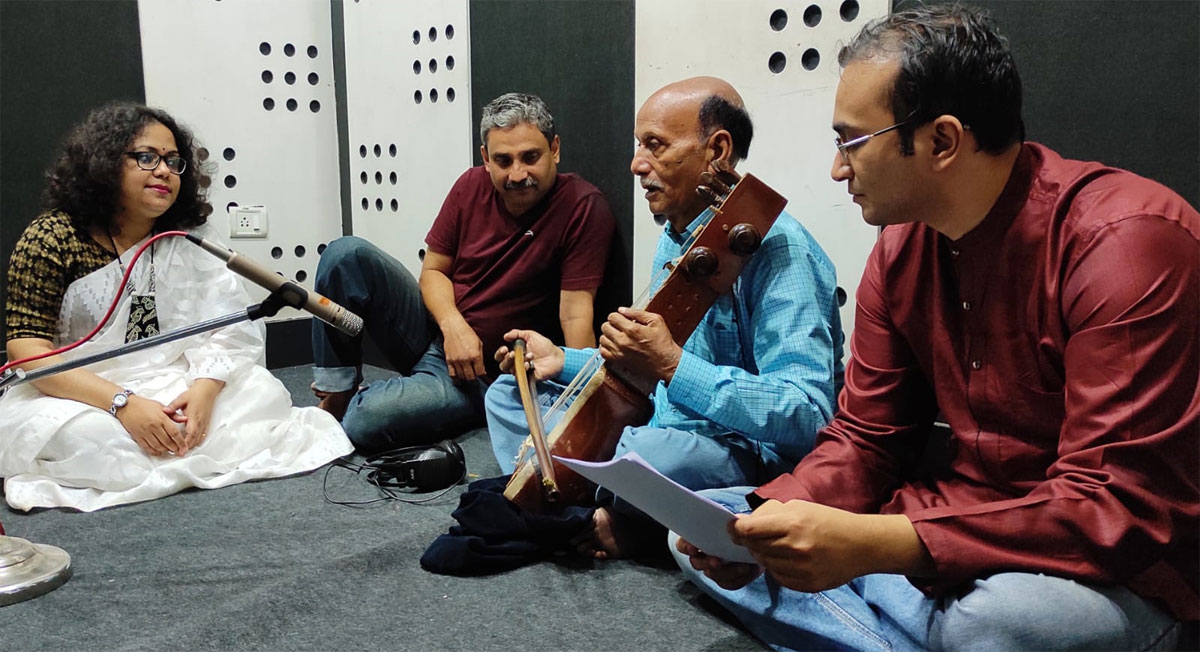
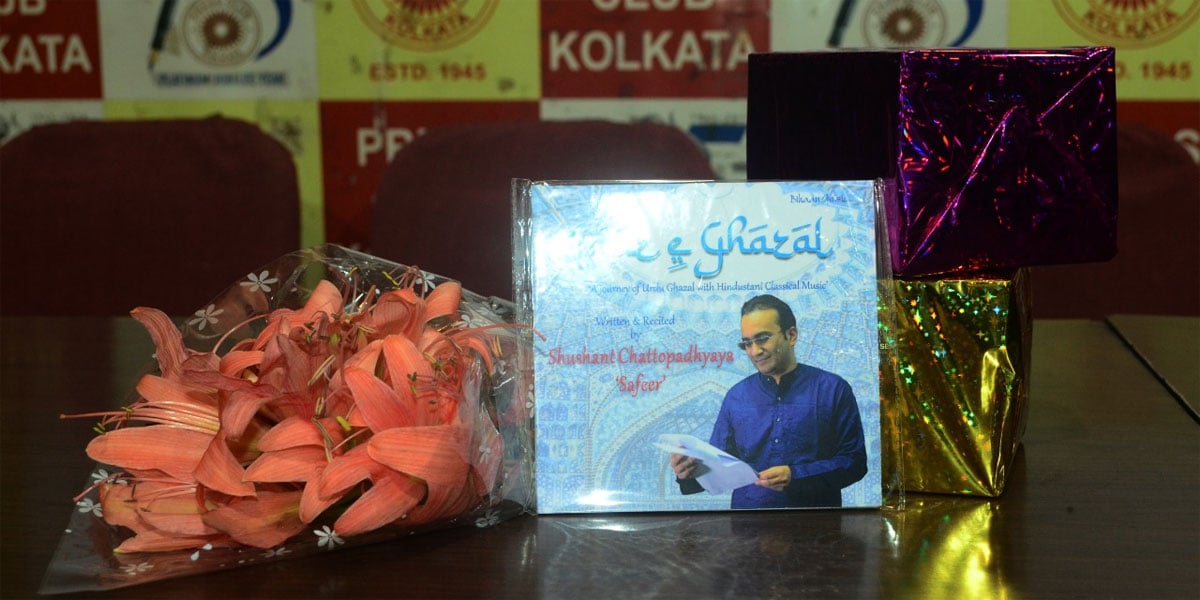
Poet Shushant Chattopadhyaya: Ghazal is an old form of poetry, and it has attracted many, including Kazi Nazrul Islam. He was the first to effectively write ghazals in Bangla. I love many of his ghazals. As someone who writes in Urdu, I couldn't resist the magnetic pull of ghazals. My ghazal album 'Saaz-E-Ghazal' came out in 2022 from Bihaan Music (Kolkata). I was fortunate that a great veteran musician like Ustad Roshan Ali Khan sahab played sarangi on the album and very talented Monit Pal, who is a disciple of Pt. Debojyoti Bose played sarod. The music arrangement was done by prominent Nazrul Geeti exponent and researcher Somerita Mallik.
Ghazal has a structure which adheres to some rules, including a meter, a rhyming pattern and a word or phrase repeated identically at the end of every rhyming line. This gives it an innate musical colour and hence people set them to tunes.
Khaborer Kagoj: Have you translated any of Nazrul’s Bengali poems or songs into Urdu?
Poet Shushant Chattopadhyaya: No, not yet.
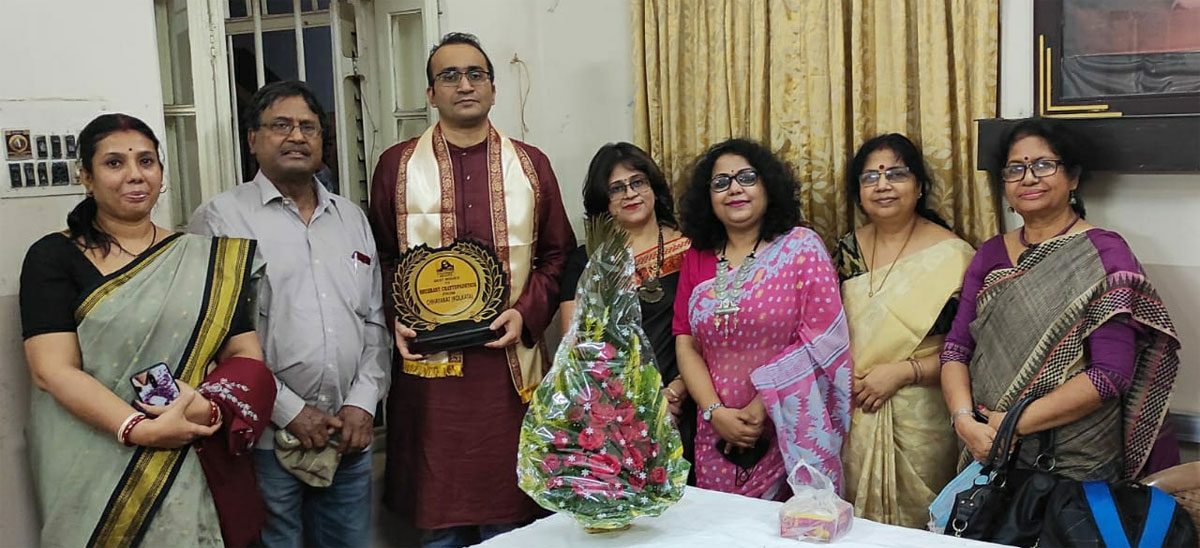
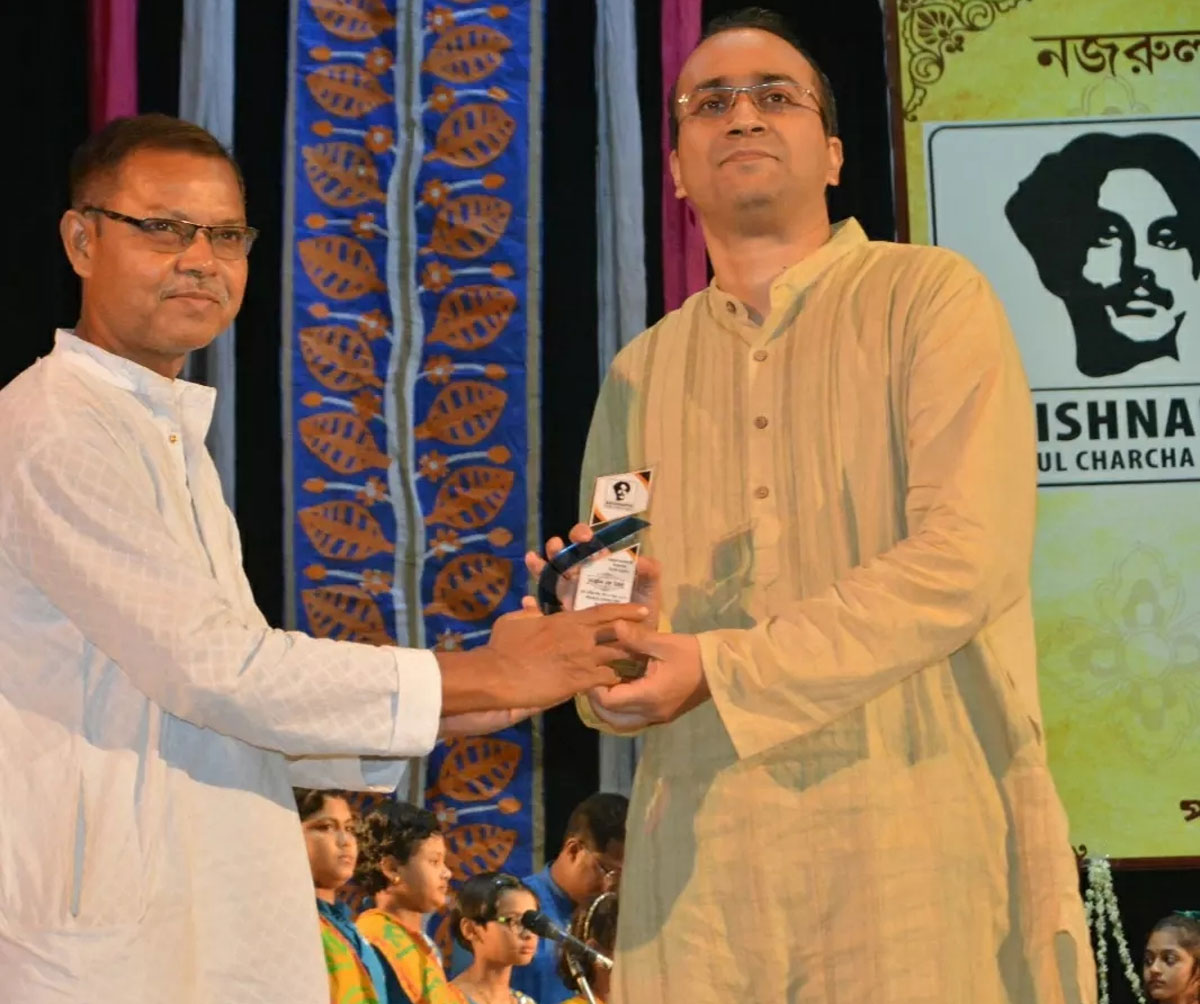
Khaborer Kagoj: The Chhayanat from Kolkata honored you for your admiration and promotion of Nazrul. How did you feel upon receiving that honor?
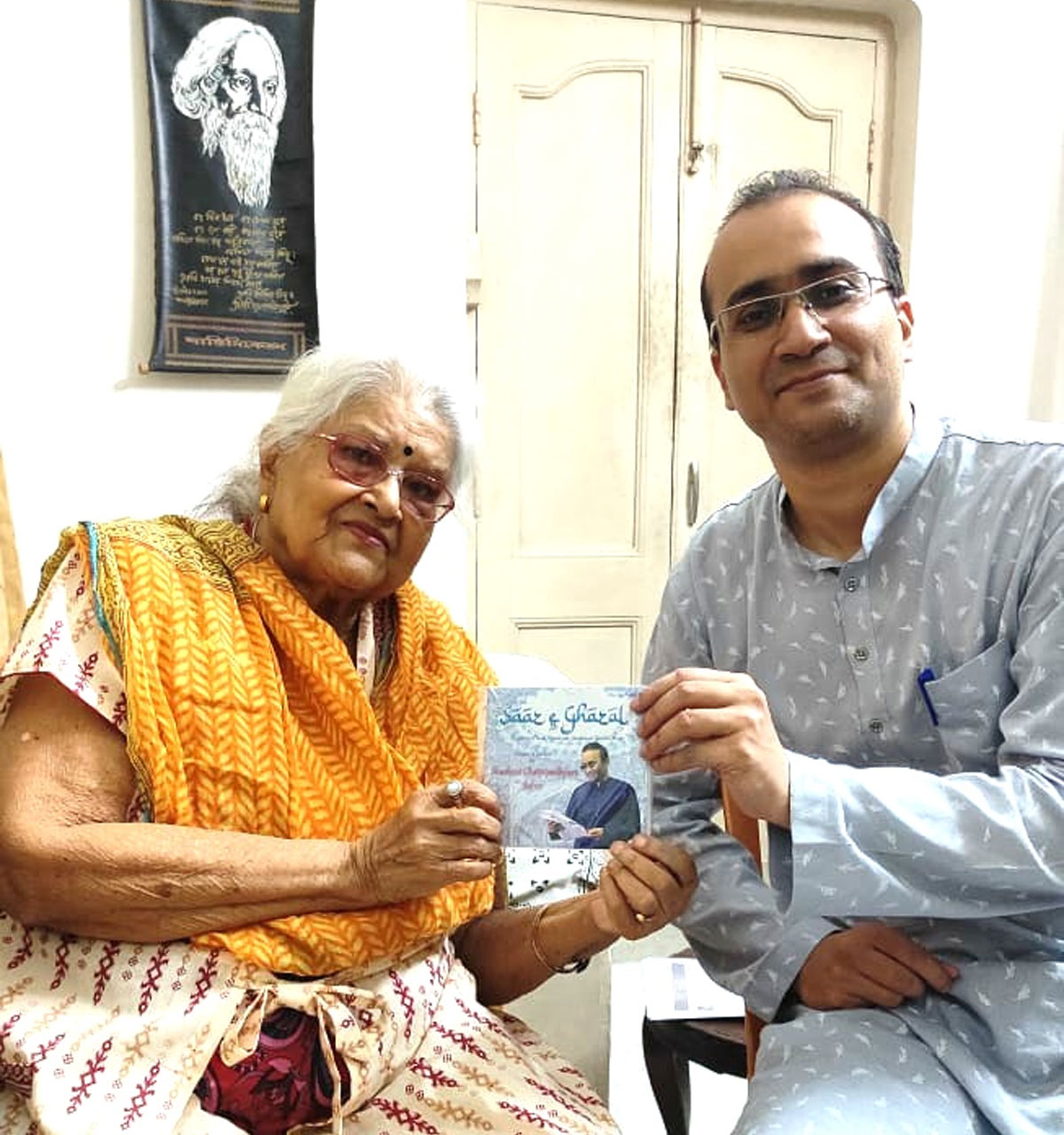
Poet Shushant Chattopadhyaya: I was felicitated by Chhayanat (Kolkata) and Krishnapur Nazrul Charcha Kendra. I feel deeply honoured by their kind gesture. As this recognition is associated with works related to Kazi Nazrul Islam, it gives me deeper joy and a sense of fulfillment. I wish to mention that Chhayanat Kolkata in 2022 organised a two-day Nazrul Kobita Utsab at the Urdu Academy (Kolkata). The event opened with me reciting my poem 'Nazrul'.
Khaborer Kagoj: Nazrul is the National Poet of Bangladesh. Do you have any desire to visit Bangladesh in future?
Poet Shushant Chattopadhyaya: Absolutely, I truly wish to visit this beautiful land of yours. My grandfather, whom I mentioned earlier, spent some years teaching in Carmichael College, Rangpur, before moving to Allahabad University. I sincerely wish to see Rangpur and many historical places here in Bangladesh, particularly the ones associated with the memories of Kazi Nazrul Islam.
Khaborer Kagoj: Your literary activities are centered in Allahabad (Prayagraj). Please tell us about the literary and cultural environment there.
Poet Shushant Chattopadhyaya: This city always had a lively and vibrant literary and cultural atmosphere. You will be fascinated to know that Rabindranath Tagore's Geetanjali was first published by the Indian Press, Allahabad. The press is still active and has published many literary books, including many by Rabindranath Tagore. The birth anniversary and death anniversary of both Rabindranath Tagore and Kazi Nazrul Islam are observed each year by many Bengali cultural associations. Historical magazines like Modern Review and Prabasi were started by Ramananda Chattopadhyaya in this city. Later moved to Kolkata (then Calcutta).
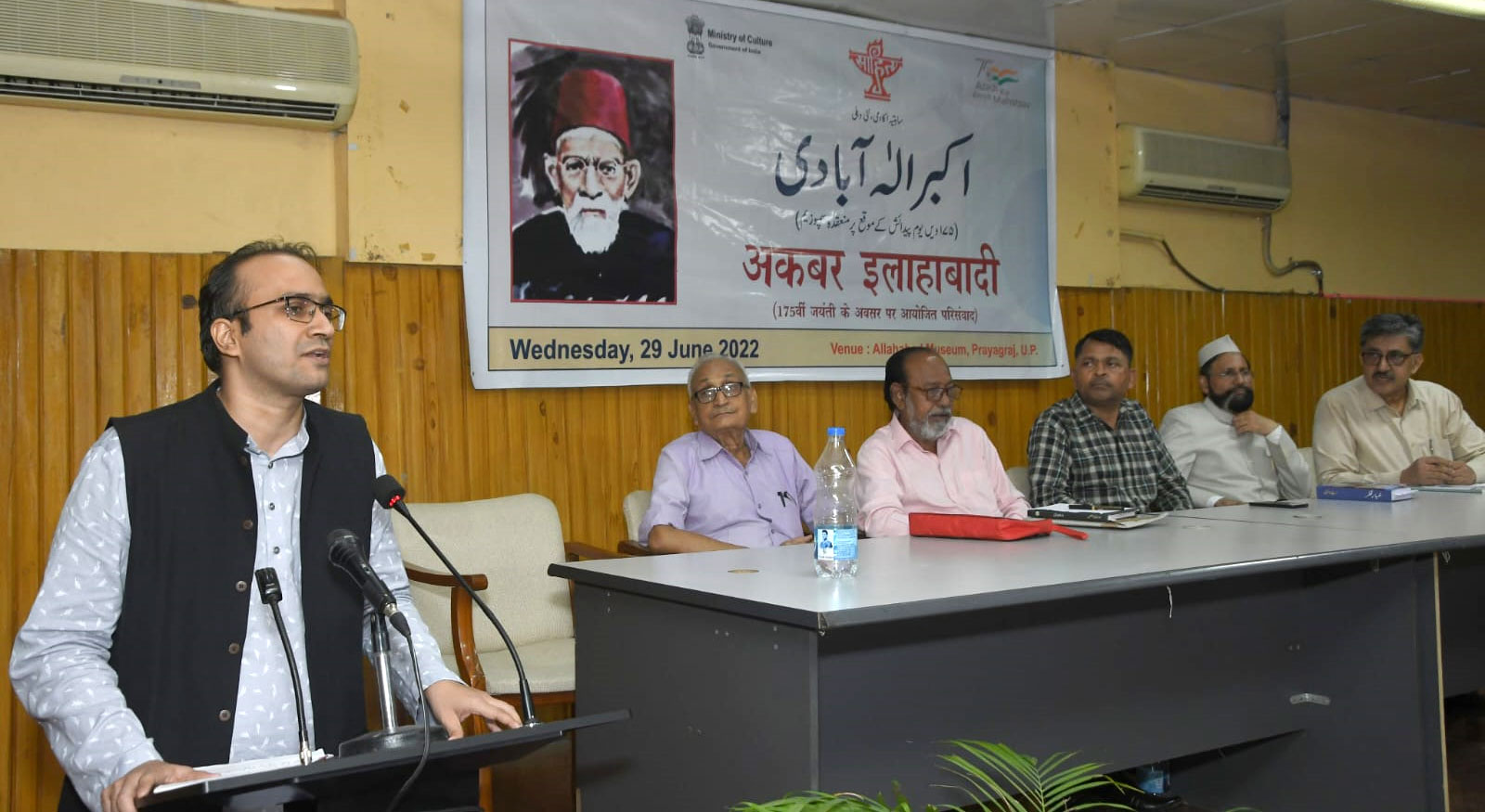
Literary and cultural activities are part of the city's essence. Many renowned Hindi/Urdu giants were from this city or did most of their work in this city. Akhbar Allahabadi, Firaq Gorakhpuri, Sumitranandan Pant, Mahadevi Verma, Suryakant Tripathi Nirala, Harivansh Rai Bachchan, to name a few.
Khaborer Kagoj: What do you think the future of Urdu poetry looks like on an all-India level?
Poet Shushant Chattopadhyaya: I am optimistic about the future. Many government organisations like the Sahitya Academy and various state Urdu Academies organise seminars and events in Urdu. I also participate in the same. Non-government organisations are also working around the year. Through radio and television programs, the Urdu language reaches a great number of people. I also regularly recite my poems on the government radio station. I have also observed that the young generation is inclined towards the language, especially Urdu poetry. The language itself is very adaptive and accepts the influence of other languages and hence it reaches more people.
Khaborer Kagoj: Thank you for taking the time to answer our questions.
Poet Shushant Chattopadhyaya: It was my pleasure


